



BLOG CATEGORIES


Sinclaire Home Services
You turn on the tap, and instead of clear, fresh water, you get a stream that’s brown, yellow, or cloudy. Beyond the ick factor, discolored water can signal real issues, from rust and sediment to metals leaching from your plumbing. Left unchecked, these problems can stain fixtures, wear out appliances, create metallic tastes, and in some cases, affect your health.
Call Sinclaire Home Services to learn more about protecting your home and family.
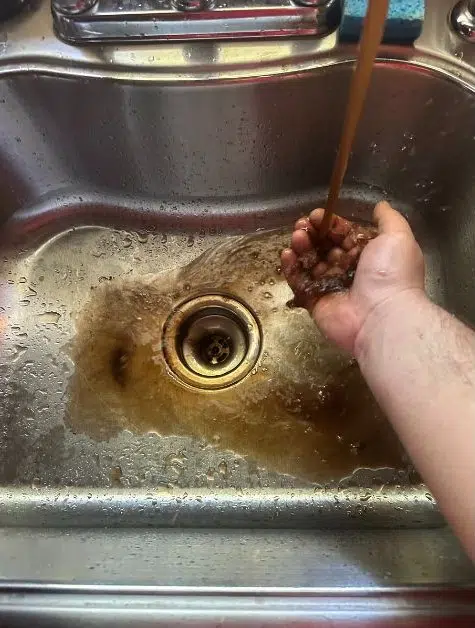
What “Brown” or “Dirty” Water Usually Means (and the Quick Science)
At its simplest, brown or murky water is water with particles suspended or minerals dissolved in it, often iron or manganese, rust from aging pipes, or sediment stirred up by utility work.
Sometimes the problem is limited to one fixture or just the hot-water line; other times it affects your entire home. Cloudiness or turbidity can also appear as tiny air bubbles or fine particles that make water look milky.
Common Causes of Brown/Dirty Water
- • Disturbance in municipal mains (hydrant flushing, nearby construction), stirring up rust/sediment
- • Iron or manganese in well water or source water
- • Corroded plumbing releasing copper or lead
- • Water heater sediment or anode corrosion
- • Seasonal shifts or runoff that change source water quality
The Usual Suspects: Metals That Discolor Water
Not every metal is a villain, but several are top culprits for color, stains, tastes, and potential health effects. The following explains how they show up and what that means for your home.
Iron
When iron oxidizes, it turns water a tea-colored brown and leaves orange-red stains on sinks, tubs, and laundry while also imparting a metallic taste. Iron is typically considered acceptable below about 0.3 mg/L; beyond that, it becomes an aesthetic and maintenance headache. Treatment ranges from softening for certain dissolved forms to dedicated iron filters, depending on whether iron is ferrous (clear-water) or ferric (particulate).
Manganese
Manganese often appears alongside iron but tends to leave black or dark brown stains and can make coffee or tea taste off. The commonly cited aesthetic limit is below about 0.05 mg/L. Depending on the concentration and form, options include softening for low levels and specialized filtration for higher levels.
Copper
Blue-green staining around sinks or tub spouts is a classic copper clue, usually from acidic water corroding copper pipes. Copper is generally kept below 1.3 mg/L. Managing low pH (acidity) helps protect pipes and reduce leaching, while point-of-use reverse osmosis (RO) can lower copper for drinking and cooking water.
Lead
Lead is a serious health concern, particularly for children and pregnant people. It commonly leaches from older pipes, solder, or brass fixtures when water is corrosive. Lead should be below 0.015 mg/L, and best practice is to minimize exposure as much as possible. Certified drinking-water filters (including RO) are commonly used, and managing corrosivity helps reduce leaching in the first place.
Chlorine and Chlorides
Many municipal systems, including ours, rely on chlorine to disinfect the water and often have higher chloride levels from things like road salt and other sources. Chlorine itself usually doesn’t turn water brown, but it can create that “swimming pool” smell and, when combined with elevated chlorides, can make water more corrosive to metal plumbing.
Over time, that extra corrosivity can speed up rusting inside pipes and water heaters, which releases iron, manganese, copper, and even lead that discolors water, leaves stains, and affects taste. A properly sized whole-house filtration system with catalytic carbon and targeted media can reduce chlorine and chlorides at the home, improve taste and odor, and help protect your plumbing. In contrast, your municipal system still handles disinfection before the water ever reaches your street.
Water that’s too acidic (pH <6.5) can aggressively corrode plumbing and leach metals like copper and lead, while very alkaline water (pH >8.5) can create scale and off-tastes. Neutralization or conditioning helps maintain a healthier range.
Why Discolored Water Is More Than a Cosmetic Issue
It Can Damage Your Home and Appliances
Metal staining is tough on fixtures and laundry. Iron and manganese deposits can foul valves and aerators, reduce flow, and contribute to scale. Over time, scale and sediment shorten the life of water heaters, dishwashers, and washing machines, which means more repairs and earlier replacements.
It Can Make Your Water Taste and Smell… Not Great
Metallic or bitter flavors frequently accompany iron, manganese, and high pH. Even when contaminants aren’t at hazardous levels, unpleasant tastes and recurring staining are strong signals to have your water tested and treated.
It Can Raise Health Concerns
While iron and manganese are mostly aesthetic concerns at typical household levels, lead and elevated copper exposure are different stories. Lead is linked to neurological, developmental, and kidney issues; copper can cause gastrointestinal upset at higher levels. In agricultural or septic runoff areas, nitrates and nitrites pose risks, particularly to infants. Microbiological contamination, such as the presence of coliform bacteria, requires immediate attention and disinfection.
What to Do When Your Water Looks Brown or Cloudy
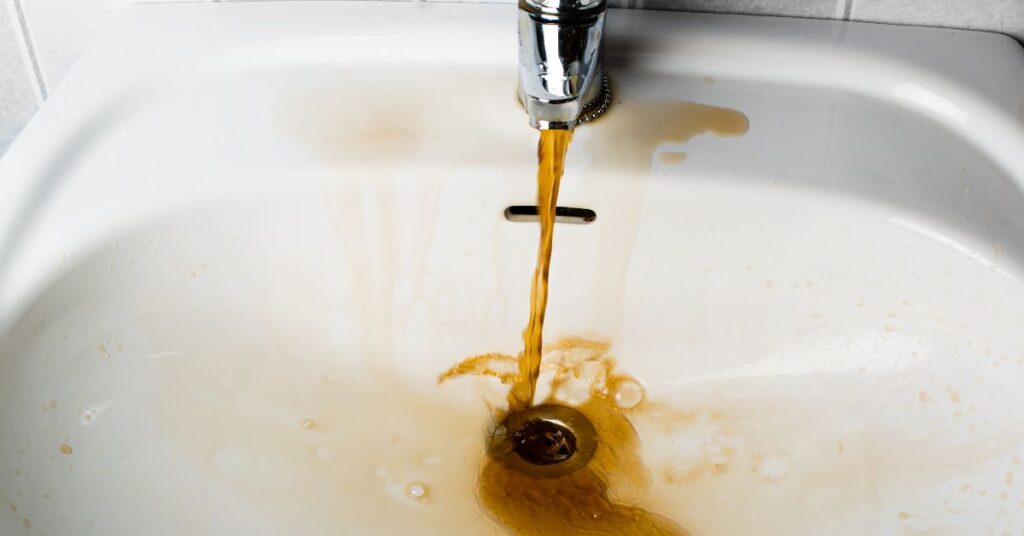
First, try to localize the issue. If only the hot water is discolored, your water heater may have sediment buildup or an anode reaction. If just one faucet shows discoloration, remove and clean the aerator, then flush the line. If the entire house is affected, especially after nearby construction or hydrant flushing, the discoloration may clear after steady running; however, recurring problems shouldn’t be ignored.
Second, don’t guess. A professional water analysis looks at metals like iron, manganese, copper, and lead; evaluates pH and hardness; and, when appropriate, checks for nitrates, nitrites, and coliform bacteria. Accurate testing prevents overspending on the wrong solution and ensures the filtration strategy actually targets your issue.
Third, fix the root cause. For corrosion-driven metals, address pH and corrosivity. For iron and manganese, specify the right filter chemistry based on the form and level. For lead and specific drinking-water concerns, add certified point-of-use filtration such as RO. For bacteria, include UV disinfection after particulates are filtered out.
Whole-House Water Filtration: Clean Water at Every Tap
A whole-house (point-of-entry) system treats water as it enters your home, protecting every faucet, shower, and appliance. System media can be selected to address sediment and rust, oxidize and capture iron and manganese, and reduce tastes and odors with catalytic carbon. Specialty media can target problem metals and other contaminants. With the right design, your system can be tailored to the results of your water test.
Featured Snippet-Ready: Benefits of a Whole-House Water Filter
- • Cleaner, better-tasting water at every faucet and shower
- • Protection from stains and scale on sinks, tubs, and fixtures
- • Longer appliance and water-heater life, fewer repairs
- • Safer water for cooking and bathing; peace of mind for your family
For drinking and cooking, pairing whole-home filtration with a reverse osmosis faucet at the kitchen sink adds targeted reduction for lead, arsenic, nitrates, sodium, and more. UV disinfection can be included when microbiological safety is a concern.
Choosing the Right Treatment (Based on Your Water Test)
If iron or manganese are the culprits, use oxidation-filtration (and in some low-level cases, a softener), with good pre-filtration and regular backwashing. For corrosive, low-pH water, add an acid neutralizer (calcite or calcite/corosex) to protect pipes; if metals have already leached, follow with targeted filtration.
Hardness can worsen issues by scaling pipes and heaters, use a softener or scale-prevention filter. For lead or copper at the tap, control corrosivity first, then add certified point-of-use filtration or RO; updating older fixtures helps long term. Nitrates/nitrites are typically handled with RO. If bacteria are present, install UV disinfection after sediment filtration (wells may need shock treatment and retesting). In areas with arsenic, uranium, or radon, use specialty media or RO (aeration for radon) and retest to confirm performance.
Will It Clear Up on Its Own?
Sometimes discoloration is a one-time event caused by a disturbance in the city mains, and it may clear after running the water. If brown water returns regularly, if you notice persistent staining, or if blue-green marks appear that suggest copper, it’s time to look deeper. Ongoing issues usually point to a controllable problem, such as corrosion, metals, sediment, or microbiology, that won’t resolve without targeted treatment.
Real-World Clues You Shouldn’t Ignore
Stains that show up as orange or red indicate iron, black or brown often point to manganese, and blue-green streaks typically indicate copper. If you’re scrubbing these away every week, treatment will likely save time and protect your fixtures.
Metallic flavors, bitter notes, or a swimming-pool-like aroma are signs of specific chemistry that filtration can address. If appliances seem to wear out faster, like frequent heating elements or valve replacements, sediment, scale, or metal deposits could be to blame, and your water may need attention.
FAQs: Brown or Dirty Water
Why is my water brown all of a sudden?
A sudden color change often follows hydrant flushing, nearby construction, or a water-main disturbance that stirs up rust and sediment. If the water clears after a short flush and doesn’t return, it was likely temporary. If it persists or recurs, schedule a test and inspection.
Is brown water safe to drink?
Not necessarily. Iron and manganese are mostly aesthetic at typical levels, but discolored water can also indicate corrosion that leaches copper or lead, or other contaminants. Because lead is hazardous even at low levels, don’t rely on appearance alone; get a professional test and implement certified filtration where needed.
Why does my water taste metallic?
Iron, manganese, and sometimes copper commonly cause metallic tastes. A water test will confirm which metals are present and guide you toward the right filter media or an RO solution.
How do I fix brown water from a well?
Start with a comprehensive test to identify the specific contaminants. Many wells contain iron and manganese that require oxidation-filtration or, in some low-level cases, softening, along with sediment pre-filtration. If bacteria are present, add UV disinfection after particulates are removed.
Can my water heater cause brown or cloudy water?
Yes. Sediment buildup and anode reactions can discolor hot water. Flushing the tank can help, but if metals are present in your source water, addressing them at the home’s entry will protect the heater long-term.
Do I need a whole-house filter or just a drinking water system?
If stains and discoloration appear throughout the home from laundry to bathrooms to fixtures, a whole-house system is the best first step. For targeted reductions like lead, arsenic, nitrates, and sodium, add a reverse osmosis faucet at the kitchen sink.
Get Clear, Safe Water – Call Sinclaire Today

If your tap is showing shades of brown or cloudy white, don’t shrug it off. Discolored or cloudy water could mean your home has iron, manganese, copper, or even lead in the supply. These can stain sinks and tubs, cause metallic tastes, damage your plumbing, or worse, affect your health over time. A whole-house water filter removes these contaminants before they reach your faucets, so you get cleaner, safer water throughout your home.
Sinclaire Home Services can test your water, diagnose the cause, and design a filtration solution that protects your family and your investment.Call Sinclaire Home Sinclaire today to schedule your water test and get crystal-clear water back where it belongs at every tap.
OUR SERVICE AREAS
- Ashland, Ma
- Attleboro, Ma
- Bellingham, Ma
- BLACKSTONE, MA
- BRIDGEWATER, MA
- Canton, Ma
- Dedham, Ma
- Dover, Ma
- EAST BRIDGEWATER, MA
- Easton, Ma
- Foxborough, Ma
- Framingham, Ma
- Franklin, Ma
- Holliston, Ma
- HOPEDALE, MA
- Hopkinton, Ma
- Mansfield, Ma
- Medfield, Ma
- Medway, Ma
- MENDON, MA
- MILFORD, MA
- MILLIS, MA
- MILLVILLE, MA
- MILTON, MA
- NATICK, MA
- NEEDHAM, MA
- NEWTON, MA
- NORFOLK, MA
- NORTH ATTLEBORO, MA
- NORTON, MA
- NORWOOD, MA
- PLAINVILLE, MA
- RANDOLPH, MA
- RAYNHAM, MA
- SHARON, MA
- SHERBORN, MA
- STOUGHTON, MA
- SUDBURY, MA
- TAUNTON, MA
- WALPOLE, MA
- WAYLAND, MA
- WELLESLEY, MA
- WEST BRIDGEWATER, MA
- WEST ROXBURY, MA
- WESTON, MA
- WESTWOOD, MA
- WRENTHAM, MA
AFFILIATIONS

 Call NOW (508) 507-6373