



BLOG CATEGORIES

Sinclaire Home Services
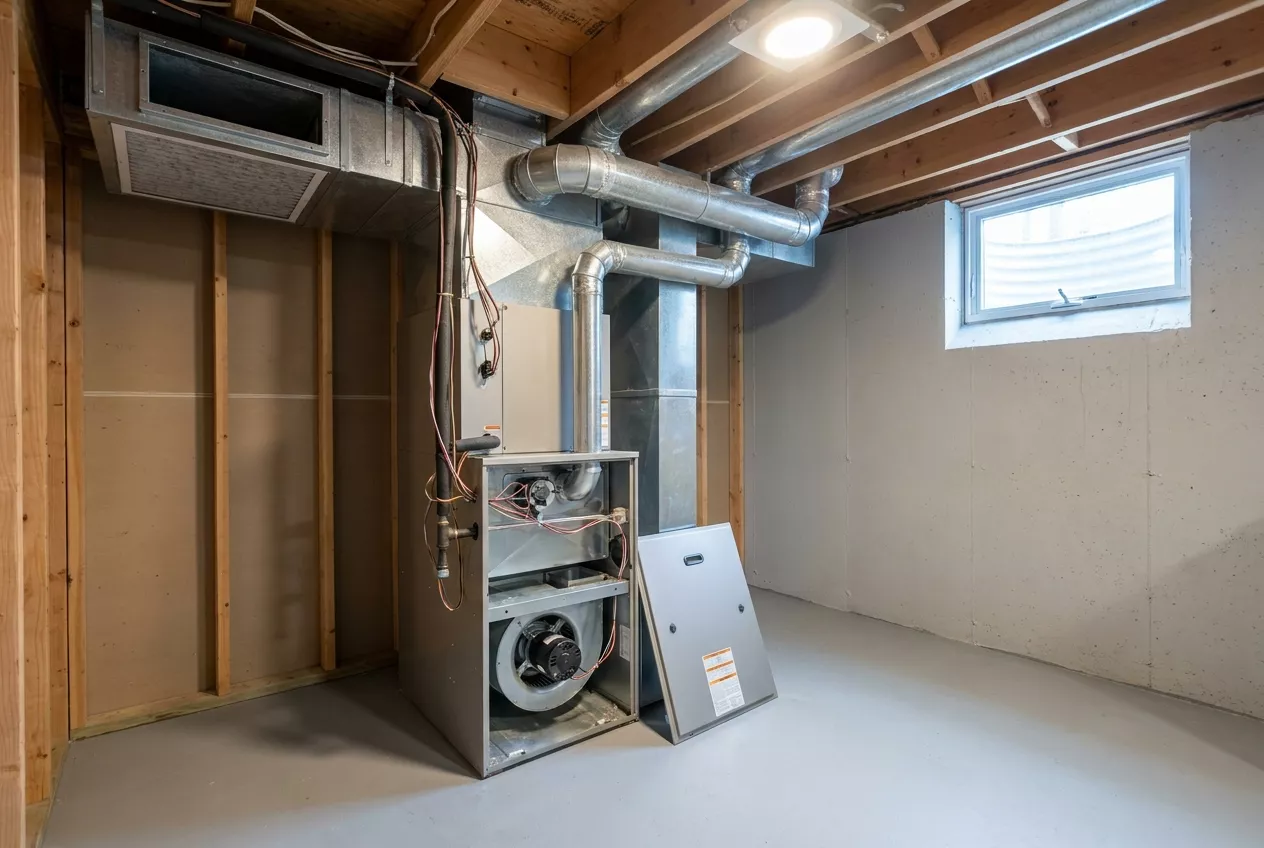
No, your furnace does not need to be heating for your air conditioner to work. However, many central AC systems use the furnace blower motor to circulate cool air through the ductwork.
Your furnace and AC are separate systems, but they share airflow components like the blower, ducts, air filter, and thermostat.
What You Will Learn About the Furnace and AC Connection:
- Whether your furnace has to run for the air conditioner to cool
- Why the furnace blower motor for AC operation matters all summer
- What to check when the AC is running but no air from vents reaches your rooms
- How to spot an AC not working because of furnace trouble instead of a cooling failure
- When shared component problems call for a licensed HVAC technician
How to Tell If the Problem Is Your Furnace or AC System
| What You Notice | Likely Source | What It Usually Means |
|---|---|---|
| Outdoor unit runs, but little or no air comes from the vents | Furnace side (blower or filter) | The cooling system is working, but nothing is moving the cool air |
| Air moves from the vents, but it never feels cold | Cooling side (refrigerant, coil, or compressor) | The blower is fine, but the system is not removing heat |
| Nothing runs at all, indoors or outdoors | Electrical or thermostat | Power, control, or safety switch problem that needs testing |
Stop and call a professional if you notice any of these warning signs:
- Buzzing or humming from the furnace cabinet but no fan movement
- Burning smell or visible smoke near the furnace or vents
- The blower starts but won’t stay on (short cycling)
- Ice forming on the evaporator coil or refrigerant lines
- A tripped breaker that keeps flipping after you reset it
These are signs of a serious furnace issue or electrical problem. Do not try to fix them yourself. A licensed technician can test the blower motor, capacitor, and control board safely and confirm whether the fault sits on the heating side or the cooling side.
How Do Air Conditioners And Furnaces Work Together?
Your air conditioner and furnace are both parts of your HVAC system, which stands for heating, ventilation, and air conditioning. When it comes to air conditioning service, Mansfield homeowners normally use their AC during the warm summer months. You probably turn the heater on when autumn temperatures start to drop and use it until spring arrives. These systems perform opposite functions, either cooling or warming your home, but they both use your HVAC’s vents and ducts to move air throughout your home. This connection between your furnace and AC means they rely on the same air handler and ductwork to deliver conditioned air, even though only one system runs at a time.
So when homeowners ask whether the AC uses the furnace, the honest answer is that it borrows part of it. The burners stay off in July, but the cabinet, the fan, and the ducts are all still in play.
How Cool Air Actually Reaches Your Rooms
Here is the path that cool air actually takes in a central system. The thermostat calls for cooling, the outdoor condenser and compressor start, warm indoor air passes over the chilled evaporator coil, the furnace blower pushes that cooled air into the ducts, and it finally arrives at your supply vents. Break any single link in that chain and the whole system feels like it has failed, even when only one part has.
What Is The Difference Between Forced Air And Central Air?
A forced air system is any HVAC setup that uses ducts and vents to move heated or cooled air through your home. Central air is a specific type of cooling system that uses a closed refrigerant loop to remove heat from indoor air.
The parts of your HVAC system work differently depending on how they send air throughout your home. Forced air systems move air around your home using ducts and vents. Your furnace is a forced air system. These designs raise your home’s temperature by spreading warm air throughout the house.
Central air systems, on the other hand, use closed loops to send cool air into your house. As we’ve seen over the years, most local homes use central air conditioning. A central air system has a variety of components like condensers, compressors, fans, and evaporator coils.
These elements perform a few functions at the same time. Your AC system draws hot air out of your home to release the indoor heat. It also pulls outdoor air, refrigerates it, and circulates this cold air back throughout your house. Many homes in America have this type of AC system.
In most older New England homes, those two designs are combined: central air handles the cooling, and the forced air furnace handles the delivery. That pairing is exactly why a heating component can sideline your cooling in the middle of August.
Are Furnaces and Air Conditioners Separate Systems?
Your furnace and air conditioner are stand-alone components of your HVAC system. Both your furnace and your AC use ducts and vents to circulate air throughout your home. These systems are tied together because they use the same infrastructure. However, they still operate independently of each other.
Your air conditioner can run when the furnace is not heating. Many systems still use the furnace blower to move air through the ducts. The reverse is also true. Your furnace should be able to work without turning on the air conditioner. These systems aren’t designed to overlap.
As we like to tell our furnace repair Norwood clients, you can think of your furnace and air conditioner as two stores, side by side on the same street. Both shops use the road to make deliveries, but they’re still independent companies. One store can be open even when the other is closed. The same is true for your furnace and air conditioner. These systems use the same vents, but they’re not dependent on each other aside from that. If you find yourself running both systems at the same time to get air moving, that’s a sign of major problems.
Does The AC Require The Furnace To Operate?
No, the AC does not require the furnace to be heating your home. But the AC needs the furnace blower to circulate cool air through the ductwork. The blower motor inside the furnace cabinet acts as the AC air handler for most central air systems. So while the furnace burner stays off during summer, the blower fan still runs when the AC kicks on.
Think of it this way: the furnace has two jobs. In winter, it creates and pushes warm air. In summer, it only pushes air that the AC has already cooled. The heating function and the blowing function are separate.
That distinction answers the question directly: does the furnace need to be on for AC to work? Only the fan side of it does.
Note: If you have a heat pump, a dedicated air handler, or a ductless mini-split, your cooling may not rely on a furnace blower at all.
Should Your Thermostat Fan Be Set to AUTO or ON in Summer?
AUTO is the better default for most Massachusetts homes. The blower runs only while the system is cooling, so the coil stays cold enough to pull humidity out of the air. Setting the fan to ON keeps air moving through the filter and evens out temperatures between floors, but it uses more electricity and can push moisture from the coil back into your living space.
The circulate mode on newer smart thermostats splits the difference. If your home only feels comfortable with the fan set to ON, that points to a duct, airflow, or sizing issue a technician should evaluate.
Do Heat Pumps and Ductless Systems Change the Answer?
Yes, and this matters more every year as Massachusetts homeowners electrify their heating and cooling. A heat pump handles both heating and cooling from the same outdoor unit and pairs with an air handler, so there may be no furnace in the equation at all.
A ductless mini-split blows conditioned air directly into the room and skips ductwork entirely. In dual fuel setups, a furnace and a heat pump share the same ducts and blower, and the controls decide which one runs based on outdoor temperature. If you are not sure which setup you have, a technician can identify it in minutes during a routine visit.
What Furnace Parts Does The AC Rely On?
Your AC relies on a few key furnace parts to work correctly. Here are the main components your AC shares with the furnace.
- Blower motor: This is the fan inside the furnace cabinet. It pushes cooled air from the evaporator coil through your ducts. Your air conditioner depends on this fan to deliver cold air to every room.
- Ductwork and vents: Both systems share the same network of ducts and return vents to circulate air.
- Air filter: The filter sits in or near the furnace. A dirty filter restricts airflow and can cause your AC to freeze up or stop working.
- Thermostat: This single control switches between heating and cooling modes and tells the blower when to run.
If any of these shared components fail, you may notice your AC not working even though the outdoor unit seems fine. A furnace issue with the blower or filter is one of the most common reasons for AC problems.
Because the AC uses the furnace blower to deliver every bit of cooled air, keeping those shared parts healthy is part of protecting your cooling season. A professional annual AC tune-up covers the blower, filter, and electrical connections at the same visit.
Can The AC Run If The Furnace Blower Is Broken?
No, your AC cannot properly cool your home if the furnace blower is broken. The outdoor AC unit may still turn on, but without the blower pushing air over the evaporator coil, cool air will not reach your rooms. This is one of the most overlooked causes of an AC not working during summer.
In short, a furnace blower problem can absolutely stop the air conditioner from doing its job. The cooling equipment may be in perfect condition, but a failed capacitor, seized motor, or bad control board leaves the cold air trapped at the coil.
Here are signs the furnace blower may be the problem:
- The outdoor AC unit is running, but no air comes from the vents
- You hear humming from the furnace cabinet, but the fan does not spin
- Rooms feel warm even though the thermostat is set to cool
- The evaporator coil freezes because of a lack of airflow
If you notice any of these signs, do not ignore them. A broken blower can cause the evaporator coil to ice over, which may lead to water damage or compressor failure. Contact a professional to inspect the furnace issue right away.
If the outdoor unit is running but there is no airflow indoors, turn the system off to help prevent coil icing and call a licensed HVAC technician.
Why Is Understanding the Furnace and AC Connection Important?
Understanding the furnace and AC connection helps you troubleshoot problems faster and avoid unnecessary repair costs. Many homeowners call for AC repair when the real problem is a furnace issue with the blower, filter, or thermostat.
The main benefits of understanding how these systems connect include:
- Faster troubleshooting when your AC is not working
- Avoiding duplicate service calls for furnace and AC problems that share a root cause
- Better communication with your HVAC technician about what you are experiencing
- Longer system lifespan through proper maintenance of shared heating and cooling parts
Regular maintenance of the blower motor, air filter, and ductwork keeps both your heating and cooling systems running smoothly. Most HVAC professionals recommend scheduling a tune-up at least once a year for each system.
If the outdoor unit will not start at all, the cause may sit on the electrical side instead, which is where checking the air conditioner fuse comes into the conversation. Either way, a technician should confirm the diagnosis before any part is replaced.
Current Best Practices for the Parts Your AC Shares With the Furnace
These are the recommendations our technicians give Massachusetts homeowners today, and they all protect the shared airflow components that both systems depend on.
- Protect airflow first. Use a MERV 8 to 13 pleated filter, check it monthly in heavy use, and replace it every one to three months. Filters denser than your blower was designed for, closed vents in unused rooms, blocked returns, and leaky ductwork all raise static pressure and force the blower to work harder than it was built to.
- Book two tune-ups a year, not one. Pair a spring air conditioning tune-up with a fall furnace tune-up. The blower, capacitor, and electrical connections get inspected twice a year instead of once, which is where most airflow failures start.
- Ask about a variable speed blower at replacement time. Modern ECM blower motors ramp up and down instead of cycling full blast, which means quieter operation, better humidity control, and lower electricity use. Ask about the options during an AC installation consultation.
- Factor in the refrigerant change if your system is aging. New residential cooling equipment now ships with low global warming potential refrigerants such as R-454B rather than R-410A. If your condenser is 12 to 15 years old, it is worth comparing repair costs against a planned replacement, as this AC repair versus replacement guide explains.
- Consider a maintenance plan. Our home service maintenance plans schedule both visits automatically so the shared blower and filter never get skipped, and our seasonal HVAC maintenance guide covers what each visit includes.
How Can I Tell if the Problem Is the Furnace Side or the Cooling Side?
Use the airflow versus temperature test from the comparison table above, then note two things before you call: which row matches what your home is doing, and any sound coming from the furnace cabinet. Age of the equipment and the date of the last tune-up help too. Those details let our technicians arrive with the likely parts already on the truck, which usually means one visit instead of two.
How Do You Solve Furnace Or Air Conditioner Problems?
Your furnace and air conditioner should operate independently of each other. If you notice poor performance from either system, it’s time to call Sinclaire Home Services. Our expert technicians are trained to solve the most complicated situations. Your furnace and AC both use the same ducts, so trouble with your vents could lead to problems for either system. It’s important to work with experienced professionals when you’re having HVAC issues.
Whether the problem is an AC not working, a furnace issue with the blower, or airflow trouble caused by shared equipment, our team can diagnose and fix it. You can see the full scope of our air conditioning repair services and our wider air conditioning and cooling work before you book.
We’re ready to find, identify, and solve any heating or cooling problem. Contact Sinclaire Home Services today for speedy, reliable Massachusetts HVAC repair.
Why Walpole Homeowners Trust Sinclaire Home Services
Sinclaire Home Services has provided heating and air conditioning service in Walpole, MA and more than 45 surrounding Massachusetts communities since 1948. A question like this one is exactly where that experience shows, because the answer depends on how your specific system was installed and what it shares between heating and cooling.
Our technicians diagnose the blower motor, the thermostat, the ductwork, and the electrical connections that tie them together, so you get one visit instead of a guess and a callback. Our sheet metal work is licensed at the Master-Unrestricted level, which covers the ductwork and airflow side of exactly this problem. We tell you what failed and why in plain language, and you get upfront pricing before any work starts.
Cool Air Not Reaching Your Rooms? Let’s Fix That Today
A blower or airflow problem is a repair our technicians handle every week, and catching it early protects your compressor and your comfort. Call Sinclaire Home Services at (508) 507-6373 or Toll Free at (877) 668-8822, email info@sinclaireboston.com, or book a visit online. We keep homes comfortable in Walpole, Norwood, Mansfield, Foxborough, Sharon, Needham, Easton, and more than 45 nearby Massachusetts communities.
Prefer to get ahead of it instead? Ask about a home service maintenance plan so your blower, filter, and coil are inspected every season, and check our current offers before you book.
Frequently Asked Questions
Does the AC require the furnace to operate?
No. The AC does not need the furnace to produce heat. However, many central air systems use the furnace blower to move cool air through the ductwork.
What furnace parts does the AC rely on?
The AC typically relies on the furnace blower motor, ductwork, air filter, and thermostat. These components allow cooled air to circulate throughout your home.
How do I know if my AC problem is actually a furnace issue?
If the outdoor unit is running but no air is coming from the vents, the problem may be the furnace blower or a clogged air filter. Unusual sounds from the furnace cabinet or weak airflow are also common signs.
Do I need to run both the furnace and AC at the same time?
No. Your furnace and AC are designed to work independently. If you feel the need to run both systems at once, there is likely an airflow or blower issue that needs professional attention.
Why is my AC running but no air is coming from the vents?
If the outdoor unit hums along but the vents stay quiet, the cooling side is usually fine and the delivery side is not. A failed furnace blower motor, a clogged filter, a closed damper, or a frozen evaporator coil can all stop airflow. Shut the system off to prevent coil icing and have a technician test the blower.
Can a furnace blower problem stop the air conditioner from working?
Yes. Most central systems use the furnace blower motor for AC airflow, so a bad motor, capacitor, or control board keeps cooled air from ever reaching your rooms. The condenser may run normally while your home stays warm. Running it that way risks coil icing and compressor damage, so schedule a repair promptly.
Do I need to turn my furnace off for the summer?
No, and in most homes you should not. The furnace power switch also feeds the blower your air conditioner depends on, so cutting it usually stops cooling airflow too. Leave the switch on and simply set the thermostat to cool.
Last updated on August 25, 2026
OUR SERVICE AREAS
- Ashland, Ma
- Attleboro, Ma
- Bellingham, Ma
- BLACKSTONE, MA
- BRIDGEWATER, MA
- Canton, Ma
- Dedham, Ma
- Dover, Ma
- EAST BRIDGEWATER, MA
- Easton, Ma
- Foxborough, Ma
- Framingham, Ma
- Franklin, Ma
- Holliston, Ma
- HOPEDALE, MA
- Hopkinton, Ma
- Lakeville, MA
- Mansfield, Ma
- Medfield, Ma
- Medway, Ma
- MENDON, MA
- Middleborough, MA
- MILFORD, MA
- MILLIS, MA
- MILLVILLE, MA
- MILTON, MA
- NATICK, MA
- NEEDHAM, MA
- NEWTON, MA
- NORFOLK, MA
- NORTH ATTLEBORO, MA
- NORTON, MA
- NORWOOD, MA
- PLAINVILLE, MA
- RANDOLPH, MA
- RAYNHAM, MA
- SHARON, MA
- SHERBORN, MA
- STOUGHTON, MA
- SUDBURY, MA
- TAUNTON, MA
- WALPOLE, MA
- WAYLAND, MA
- WELLESLEY, MA
- WEST BRIDGEWATER, MA
- WEST ROXBURY, MA
- WESTON, MA
- WESTWOOD, MA
- WRENTHAM, MA
AFFILIATIONS

 Call NOW (508) 507-6373