



BLOG CATEGORIES

Sinclaire Home Services
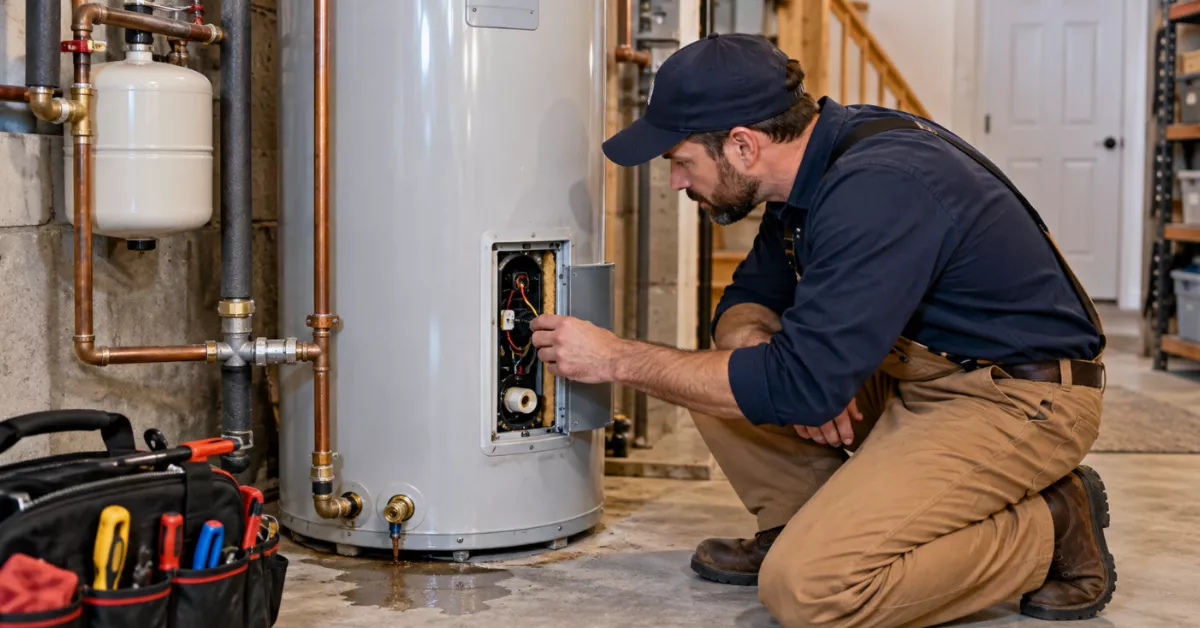
Water heater problems often start with small changes. Hot water may run out sooner, turn lukewarm, or look different. A tankless unit may show an error code or lose flow. These signs can appear before the heater stops or starts to leak.
If you need water heater repair in Medfield, MA, early service can help prevent a larger problem. Family-owned across three generations, Sinclaire Home Services has served Massachusetts homeowners since 1948. Its licensed plumbers repair standard and tankless water heaters under Massachusetts Master Plumber License #17110.
What You’ll Learn:
- Which performance changes point to a developing problem
- What noises, odors, discoloration, and moisture may indicate
- How warning signs differ between tank and tankless systems
- When repair may be reasonable and when replacement deserves consideration
Serving Medfield: Sinclaire provides water heater repair for homeowners in Medfield and nearby communities. Contact the team to confirm availability for your water heater type.
Common Water Heater Warning Signs and Possible Causes
| Warning Sign | Possible Cause | Recommended Action |
|---|---|---|
| Hot water runs out quickly | Sediment, heating component, or capacity issue | Schedule a professional inspection |
| Temperature changes | Thermostat, burner, element, or mineral buildup | Arrange service before performance worsens |
| Popping or rumbling | Sediment or scale inside the system | Have the unit evaluated |
| Rusty or unusually hot water | Corrosion, minerals, or anode rod issue | Request prompt diagnosis |
| Moisture near the unit | Connection, valve, condensation, or tank leak | Limit damage and call a plumber |
| Tankless error or low flow | Scale, filter, venting, ignition, or sensor issue | Book tankless water heater repair |
| Higher energy use | Buildup, heat loss, worn parts, or frequent cycling | Compare recent use and schedule an inspection |
Hot Water Changes Can Signal a Need for Water Heater Repair
A smaller hot-water supply or sudden temperature swings can signal a problem with storage, heat transfer, or controls. In a tank system, sediment may reduce usable capacity; a failing heating element, burner, thermostat, or dip tube can cause similar symptoms. These changes may first appear during the household’s usual shower, laundry, or dishwashing routine.
A problem affecting one fixture may point to a fixture-level issue, while changes throughout the home are more likely to involve the heater or household demand. Recovery time and usage patterns help a plumber distinguish a capacity problem from a component fault.
Water that becomes much hotter than its setting can scald. Avoid repeatedly adjusting controls to compensate; a licensed plumber can test the thermostat and heating components. Sinclaire works on electric, gas, oil, propane, and on-demand systems. See its water heater repair and installation service for the equipment it services.
Noises, Discolored Water, and Unusual Odors
Popping or rumbling often begins when sediment collects near a tank’s heat source. Water moving around the buildup can make noise and slow heat transfer, but sound alone cannot show how severe the buildup is. Do not drain or open the unit unless you know the manufacturer’s safety procedure; have a plumber assess the cause.
Rusty, cloudy, or unusual-smelling hot water can have a different source. Corrosion inside a tank or component may cause rust, while minerals, air, water chemistry, or an anode rod may affect appearance or odor. Compare hot and cold water at more than one fixture and note whether the change is limited to the hot side.
If only hot water is affected, the heater is a more likely source; if both sides are affected, a pipe or the water supply may be involved. Recurring rusty water deserves prompt evaluation because corrosion can precede a tank leak. Tell the plumber whether these signs appeared together or gradually.
Moisture Around the Unit May Signal a Leak
Water beside a heater may come from a loose fitting, a valve, condensation, or a nearby pipe; the source is not always the tank. From a dry, safe position, note whether moisture is actively spreading and where it appears. Do not touch wet wiring, controls, or nearby electrical equipment.
A leak through the storage tank usually means replacement, while a valve or connection may be serviceable after inspection. A licensed plumber can identify whether the tank shell or an attached part is leaking, which changes the next step. Even a small, contained leak should be checked before continued moisture damages floors or nearby materials.
If water is spreading, shut off the water only if the valve is safely reachable without approaching electrical equipment. Do not operate electrical or fuel controls in a wet area or if you suspect a gas leak. Move away and contact a licensed plumber; share a photo only if you can take it from a dry, safe location. If the source remains unclear, do not move or disconnect equipment before it is assessed.
Higher Energy Use with Weaker Performance
A rise in energy use matters most when the heater also delivers less hot water or takes longer to recover. Buildup, heat loss, worn parts, or frequent cycling may make the equipment run longer to meet the same demand.
Utility rates, weather, occupancy, and household demand can also change, so one bill cannot identify a failed part. Compare several billing periods and note whether higher use began alongside slower recovery, temperature changes, or unusual cycling.
A plumber can evaluate those symptoms with the heater’s size, condition, and service history. That inspection helps separate a household-use change from a repairable equipment problem.
Tankless Error Codes and Flow Changes
Recurring error codes, lower-than-usual flow, failed ignition, or hot water that turns cold during use can indicate a tankless-system fault. Possible causes include scale, an inlet-filter restriction, venting, ignition, a flow sensor, or another control. The code and the conditions when it appears help narrow the diagnosis; one code should not be treated as a parts diagnosis by itself.
The displayed code is a starting point rather than a complete diagnosis. The affected fixtures, timing, recent maintenance, and any power interruption give a plumber useful context. Do not clear recurring faults by bypassing safety controls or opening gas and electrical components.
Sinclaire services all makes and models of on-demand tankless heaters, including Navien, Triangle Tube, and Rinnai. Review its tankless water heater repair and service information and share the model and displayed code when booking.
How to Decide Between Repair and Replacement
Repair may make sense when the tank is structurally sound, the cause is identified, and the failed part can be serviced. Compare the proposed work with warranty coverage, past repairs, energy use, recovery time, and whether the system still meets household demand. A single replaceable component is a different situation from recurring failures or a leaking tank.
Replacement becomes more practical when corrosion is advanced, the tank shell leaks, the heater repeatedly fails, or it no longer supplies enough hot water. Age matters, but it should be considered with the unit’s actual condition and repair history rather than used as the only deciding factor.
Ask the plumber to explain what failed and whether the repair addresses the underlying cause. If replacement is advised, compare system capacity and fuel with household demand, not only the upfront price.
What to Do Before a Plumber Arrives
These steps help you share useful details and keep the area safe without trying to diagnose or repair the heater. Do not remove panels, drain the tank, or test gas or electrical components yourself.
- Record the symptoms. Note when the change began, which fixtures are affected, and any displayed tankless error code. Do not open the unit to find a model or code.
- Make the area accessible. Clear a safe path to the heater and, if known, have the fuel type, approximate age, and service history ready.
- Protect people and property. If water is actively spreading and the shutoff is safely reachable, stop the water supply. Stay away from wet electrical equipment and do not operate controls if you suspect a gas leak.
- Keep the area clear. Move people, pets, and stored items away from standing water or the equipment while waiting for assessment.
- Gather service records. Leave the manual or recent service paperwork accessible if you have it; do not delay a safety call to look for documents.
For a contained issue without an immediate safety risk, schedule water heater service after gathering these details.
When a Water Heater Problem Needs Urgent Help
Not every water heater problem is an emergency. However, delaying service can allow a contained leak, corrosion, or recurring performance problem to worsen. Urgency depends on immediate safety risks, whether leaking water can be contained, and the household’s need for hot water.
- Treat actively spreading or uncontrollable water, water reaching electrical equipment, or a gas odor as urgent. Move away from wet electrical areas; shut off water only if the control is safely accessible.
- If you smell gas, leave the area without operating switches or equipment, then contact the gas utility or emergency services from a safe location.
- For a contained leak or recurring performance issue without an immediate safety risk, schedule a non-emergency service visit and describe the symptoms when booking.
Review Sinclaire’s guide to plumbing emergencies for more context. For a contained water heater issue, schedule water heater service or contact Sinclaire Home Services at (508) 668-8200.
Why Medfield Homeowners Choose Sinclaire Home Services
Family-owned and operated across three generations, Sinclaire Home Services has served Massachusetts homeowners since 1948. Its approach centers on long-term customer relationships, honest recommendations, and clear explanations. Learn more about Sinclaire’s history and home-service experience.
For water heater repair, Sinclaire’s licensed plumbers work on electric, gas, oil, propane, and tankless equipment under Massachusetts Master Plumber License #17110. During the visit, the diagnosis should identify the specific problem, explain any safety concerns, and clarify what the proposed work includes.
Frequently Asked Questions
What affects the cost of water heater repair?
Cost depends on the cause, system type, access, required parts, and whether the issue involves a serviceable component or tank damage. A plumber needs to inspect the equipment before providing a specific estimate.
Can water heater repair affect the manufacturer’s warranty?
Warranty terms vary by manufacturer, model, part, and service history. Check the equipment documents and ask the plumber to review any applicable coverage before authorizing work.
What happens during a professional water heater diagnostic visit?
The plumber reviews the reported symptoms, identifies the equipment and fuel type, and inspects the relevant components and connections. After identifying the likely cause, the plumber can explain the recommended repair, safety concerns, and whether replacement should be considered.
Can I schedule water heater repair in Medfield if I do not know the model?
Yes. Share any information you have, such as the fuel type, approximate age, symptoms, or displayed error code. The plumber can identify the equipment during the visit and explain the available service options.
Schedule Water Heater Repair in Medfield, MA
Do not wait for a small change to become a cold shower or damaging leak. Sinclaire Home Services can inspect standard and tankless systems and explain what the unit needs.
Contact Sinclaire Home Services to schedule service in Medfield and surrounding communities, or call (508) 668-8200. The team is based at 140 South St., Unit 6, Walpole, MA 02081 and has served area homeowners since 1948.
OUR SERVICE AREAS
- Ashland, Ma
- Attleboro, Ma
- Bellingham, Ma
- BLACKSTONE, MA
- BRIDGEWATER, MA
- Canton, Ma
- Dedham, Ma
- Dover, Ma
- EAST BRIDGEWATER, MA
- Easton, Ma
- Foxborough, Ma
- Framingham, Ma
- Franklin, Ma
- Holliston, Ma
- HOPEDALE, MA
- Hopkinton, Ma
- Lakeville, MA
- Mansfield, Ma
- Medfield, Ma
- Medway, Ma
- MENDON, MA
- Middleborough, MA
- MILFORD, MA
- MILLIS, MA
- MILLVILLE, MA
- MILTON, MA
- NATICK, MA
- NEEDHAM, MA
- NEWTON, MA
- NORFOLK, MA
- NORTH ATTLEBORO, MA
- NORTON, MA
- NORWOOD, MA
- PLAINVILLE, MA
- RANDOLPH, MA
- RAYNHAM, MA
- SHARON, MA
- SHERBORN, MA
- STOUGHTON, MA
- SUDBURY, MA
- TAUNTON, MA
- WALPOLE, MA
- WAYLAND, MA
- WELLESLEY, MA
- WEST BRIDGEWATER, MA
- WEST ROXBURY, MA
- WESTON, MA
- WESTWOOD, MA
- WRENTHAM, MA
AFFILIATIONS

 Call NOW (508) 507-6373